CREDIT CARDS
Secured vs. Unsecured Credit Cards: What Is The Difference?
EXPECTED READ TIME: 8 MINUTES
Getting a credit card isn’t always easy, especially if you don’t have much credit or your credit isn’t so great.
One alternative is to open a secured credit card. Designed for people with weaker credit, secured cards offer the same convenience as regular (unsecured) credit cards but often come with easier approval.
In fact, for many, a secured credit card is the first step in building a healthy relationship with credit — and it might be a good fit for you, too.
Key Findings
Secured credit cards require a refundable deposit and are easier to get approved for, making them a common starting point for people trying to build credit or working to rebuild it.
Unsecured credit cards do not require a deposit, typically offering higher limits, more rewards, and additional benefits.
Both card types generally report to credit bureaus, helping build your credit history when used responsibly.
The right card for you depends on your credit history, whether you can put a deposit down, and what features matter most to you.
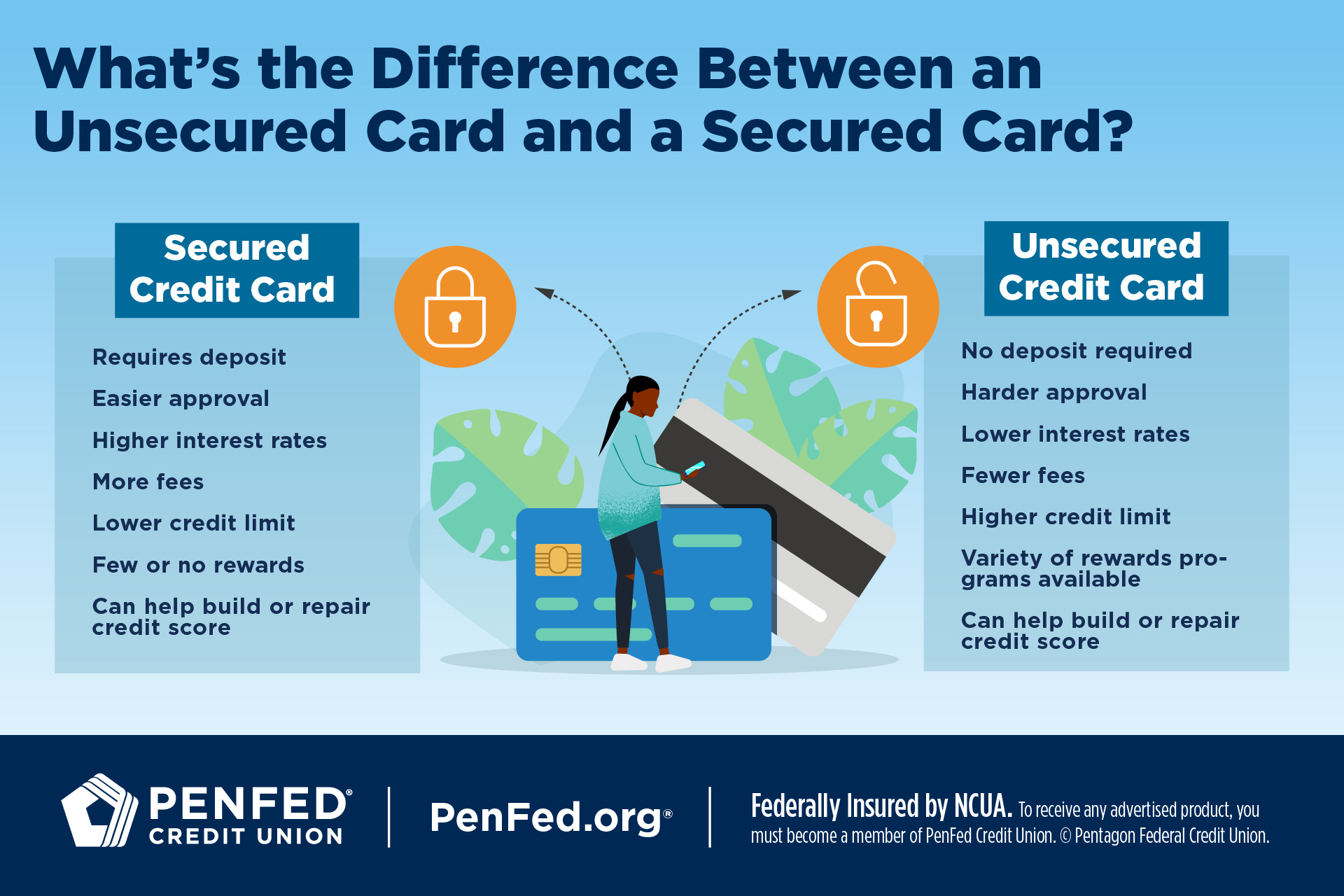
What Is the Difference Between a Secured and Unsecured Credit Card?
The main difference between secured and unsecured credit cards is that secured cards require you to put down a security deposit. This deposit often establishes the card’s spending limit, and it protects the lender if a borrower is unable to pay their credit card bill.
Secured credit cards are easier to get approved for because they are backed by collateral, making them safer for lenders. They come with higher interest rates, lower credit limits, and fewer rewards than unsecured cards, but they can be a good option for people who are establishing credit for the first time or repairing poor credit.

Most credit cards are unsecured, meaning that you can make payments or borrow money (in the form of cash advances) without ever putting up collateral. They often have fewer fees, higher credit limits, and better rewards programs. But you will need a higher credit score to qualify.
Some secured cards can be upgraded to unsecured cards if you establish a good payment history over time. Secured credit cards can help build your credit score just like unsecured cards and other forms of debt. It all comes down to careful management and steady repayment.
| Secured Credit Cards | Unsecured Credit Cards |
|---|---|
| Requires deposit | No deposit required |
| Easier approval | Harder approval |
| Higher interest rates | Lower interest rates |
| More fees | Fewer fees |
| Lower credit limit | Higher credit limit |
| Few or no rewards | Variety of rewards programs available |
| Can help build or repair credit score | Can help build or repair credit score |
How Do Secured Credit Cards Work?
Often with secured cards, your credit limit is tied to your security deposit. Let’s look at an example of how a $200 secured credit card works. To open the card, your lender will require you to put down $200 as your security deposit. Once that’s paid, you can pay for gas, groceries, and anything else as long as you don’t spend more than $200.
Secured credit cards are easier to get approved for because they are backed by collateral, making them safer for lenders.
With your deposit in place, you can use your card anywhere that accepts cards in your network (for example, Visa®, MasterCard®, Discover®, American Express®). You can even enjoy the same features as unsecured cards, such as tap to pay and the ability to add your card to a digital wallet.
The security deposit on a secured credit card doesn’t take the place of monthly bills. You’ll still receive a statement with your balance and interest charges each month, and if you carry a balance from month to month then you’ll be charged interest. Whenever you close the card or transition to an unsecured credit card with the same lender, you’ll get your deposit back as cash or a statement credit.

How Do Unsecured Credit Cards Work?
Unsecured cards are much more common than secured cards, so much so that when most people hear the phrase “credit card,” they automatically assume you mean an unsecured card. Unsecured credit cards don’t require you to put down a deposit to use them.
Many credit card companies require cardholders to have higher credit scores and a good credit history to open an unsecured credit card. (There are a few other steps you can take to better qualify for a credit card, too.) These cards usually come with better benefits like higher credit limits, lower interest rates, and better rewards.
Unsecured cards usually come with better benefits like higher credit limits, lower interest rates, and better rewards.
Do Secured Cards Build Credit Faster?
Credit cards are one of the fastest ways to build credit, with some people reporting positive increases in as little as six months. That’s because your card issuer will report your payment habits to the credit bureaus every month. Over time, all those reports build your credit history. And if you’re making regular, on-time payments, then your credit score will keep increasing.
Credit cards are one of the fastest ways to build credit, with some people reporting positive increases in as little as six months.
Secured credit cards don’t build your credit any faster than unsecured credit cards. In fact, there’s no difference in how secured and unsecured credit cards impact your credit score. But for people with poor credit, secured cards can be one of the most accessible ways to rebuild their credit.
Pros and Cons of a Secured Credit Card
Even though unsecured credit cards are more popular, there are a lot of advantages to secured credit cards. Here are just a few:
| Pros of Secured Credit Cards | Cons of Secured Credit Cards |
|---|---|
| Easier to get approved | Must have money for a starting deposit |
| Can get your starting deposit back | May pay higher interest |
| Can help build or repair credit | Lower credit limits |
Approval
Getting approved for a secured credit card is easier, but you will need to get together money for a security deposit.
Security Deposit
You’ll have to make a security deposit to open your secured card, but you can get it back if you’re in good standing and decide to close your secured card or upgrade to an unsecured card with the same card issuer.
Fees
Secured cards, just like unsecured cards, come with fees such as annual fees and maintenance fees. However with some know-how, you may be able to avoid common credit card fees.

Interest
Secured credit cards usually charge higher interest rates than unsecured cards.
Build or Repair Credit
Secured credit cards can be a great way to build or repair your credit because your monthly payments will be reported to credit bureaus. This makes them different from prepaid credit cards that function more like debit cards.
Rewards
A limited number of secured credit cards offer rewards, but these are much more common with unsecured credit cards.
Lower Credit Limits
Secured credit cards have lower credit limits than unsecured cards. In many cases, your credit limit is tied to the amount of your security deposit.
Secured credit cards can be a great way to build or repair your credit because your monthly payments will be reported to credit bureaus.
Pros and Cons of an Unsecured Credit Card
There are distinct advantages to unsecured credit cards, but they also carry some risks. Here are a few things to consider when you’re thinking about opening an unsecured credit card:
| Pros of Unsecured Credit Cards | Cons of Unsecured Credit Cards |
|---|---|
| No deposit required | Harder to get approved |
| Lower fees than unsecured cards | Higher fees than other forms of borrowing |
| Can help improve your credit | May require credit to already be established |
| Usually offer better rewards |
No Deposit
Unsecured credit cards don’t require a deposit.
Harder to Get Approved
It’s harder to get approved for an unsecured credit card than a secured card. However, it’s easier to get approved for an unsecured credit card than other types of credit (like personal loans).
Fees
Unsecured credit cards have lower fees than secured cards, but their fees are higher than on other forms of borrowing like personal loans or HELOCs.
Unsecured credit cards have lower fees than secured cards.
Impact on Credit
Both secured and unsecured credit cards can help you improve your credit if you manage them carefully. However, you may need to already have some credit history to get approved for an unsecured credit card. Most secured credit cards do require a hard credit inquiry as part of the approval process, just like with unsecured cards. There are a few options for secured cards that do not, though.
Better Rewards
Some secured credit cards do offer rewards like discounts at certain restaurants or reward points for purchases. Unsecured cards usually offer better rewards and give you more reward types to choose from.
Unsecured cards usually offer better rewards and give you more reward types to choose from.
How to Choose Between a Secured and Unsecured Credit Card
Deciding between a secured and unsecured credit card depends on where you’re at in your credit journey.
A secured credit card may be the right fit if you’re starting out with no credit, trying to rebuild your credit history, or if you’re having trouble getting approved for an unsecured credit card.
An unsecured credit card might be a better choice if you already have a credit history and steady income. You’ll avoid having to make the security deposit, and you can qualify for better rewards, higher credit limits, and lower interest rates.
Before deciding, here are a few questions to ask yourself:
- Can I afford a refundable security deposit right now?
- Is my goal to build credit for the first time or rebuild it?
- Do I want access to rewards programs?
- Am I comfortable with a lower credit limit?
Is a Secured or Unsecured Credit Card Better?
Both secured and unsecured credit cards have their benefits. If you’re starting to build credit for the first time or rebuilding your credit, a secured card might be just the tool you’re looking for to reach your financial goals.
If you already have an established credit history and qualify for an unsecured card, you may have access to higher credit limits, rewards, and other cardholder benefits without having to provide a deposit. The better option depends on your credit history, financial situation, and what you want from a credit card.
The Takeaway
Your financial situation is as unique as you are. Understanding the difference between a secured and unsecured credit card can help you make a more informed decision about which option fits your needs. No matter which type of card you choose, using your card responsibly by making on-time payments and keeping your balance low is the most effective way to build your credit over time.
Please note, PenFed does not offer a secured credit card at this time.
Credit Cards for the Way You Live
Discover the diverse offering of products, services, and support available to our members.
Frequently Asked Questions
A secured credit card works by requiring a refundable security deposit to open the account, and that deposit sets your credit limit. You use the card for regular purchases, and make payments on it like any other credit card. The deposit is not used to pay your balance each month. It’s held by the issuer as collateral, so if you default on the account, the issuer can use your deposit to cover what you owe. If you close the account in good standing or upgrade to an unsecured credit card, you get your deposit back.
Yes, a secured credit card builds credit in the same way an unsecured credit card does. Your card issuer usually reports your payment habits to the credit bureaus every month, and those same reports build your credit history over time. A major advantage is that it’s one of the most accessible ways to build credit when you can’t qualify for an unsecured card.
Use your secured credit card for small, everyday purchases. Since your limit is tied to your deposit, try to keep your balance below 30% of your limit to maintain a low credit utilization ratio. For example, on a $1,000 limit, aim to keep your balance under $300. To get the most out of using a secured credit card, make sure to pay your balance on time and in full, keep the balance low, and use it regularly.
A secured credit card requires a refundable security deposit, which sets your spending limit and protects the lender if you can’t pay your bill. Secured cards are easier to get approved for, but might come with higher interest rates and lower credit limits compared to an unsecured credit card. Most credit cards are unsecured, meaning you don’t need a deposit. They generally offer higher limits and reward programs, but you need a stronger credit profile to qualify. Both secured and unsecured credit cards can help build or repair your credit through proper management.
Every issuer sets its own standards for credit card approval, so it depends on the card. If your score isn’t strong enough to qualify for an unsecured credit card, a secured card may be a better starting point. Secured credit cards are designed to help people who are establishing credit for the first time or working to repair their credit history.