FINANCE
Needs vs Wants: How to Prioritize Your Spending
What you'll learn: How to determine needs vs wants and how to budget for both.
EXPECTED READ TIME: 6 MINUTES
One tricky area of budgeting for many people is differentiating between needs and wants. Wants are tempting, and sometimes the line between a want and a need can be blurry. Understanding the difference is important, though. From improving your budgeting to mastering your credit usage, distinguishing your needs from your wants can help you manage your money better.
Identifying Needs and Wants
On a basic level, a need is something essential for you to safely live and work. This includes food, medical care, clothing, shelter with water and electricity, and transportation. If you're missing even one of these items, it will be harder for you to stay healthy and perform well for your responsibilities.
Wants are things that improve your life or help you live or work more comfortably. This includes entertainment costs, convenience items, and luxuries. If necessary, you can reduce or eliminate these costs without harm.

Is Wanting Things Bad?
There's nothing wrong with having wants. In fact, wants motivate us to work hard. Wants only become problematic if we don't balance them with our needs. You'll need to ask yourself if you can afford your wants while supporting other financial goals like paying off student loans, building your emergency fund, or investing for retirement. If your want prevents you from reaching those goals, then it's not a wise purchase.
Wants only become problematic if we don't balance them with our needs.
Making Decisions When Needs and Wants Overlap
Distinguishing between wants and needs can be more complicated when they overlap. For instance, imagine you live in an area with limited public transportation and your job is too far for you to walk from your home. You'd need a car — but a used or affordable new car would work just as well as the luxury model you've had your eye on.
Different people have different lifestyles, and so our individual needs can vary. If you're ferrying three kids to soccer practice, you might struggle to drive a compact car comfortably — but you probably don't need the massive truck your neighbor with a landscaping business has.
If you're ferrying three kids to soccer practice, you might struggle to drive a compact car comfortably — but you probably don't need the massive truck your neighbor with a landscaping business has.
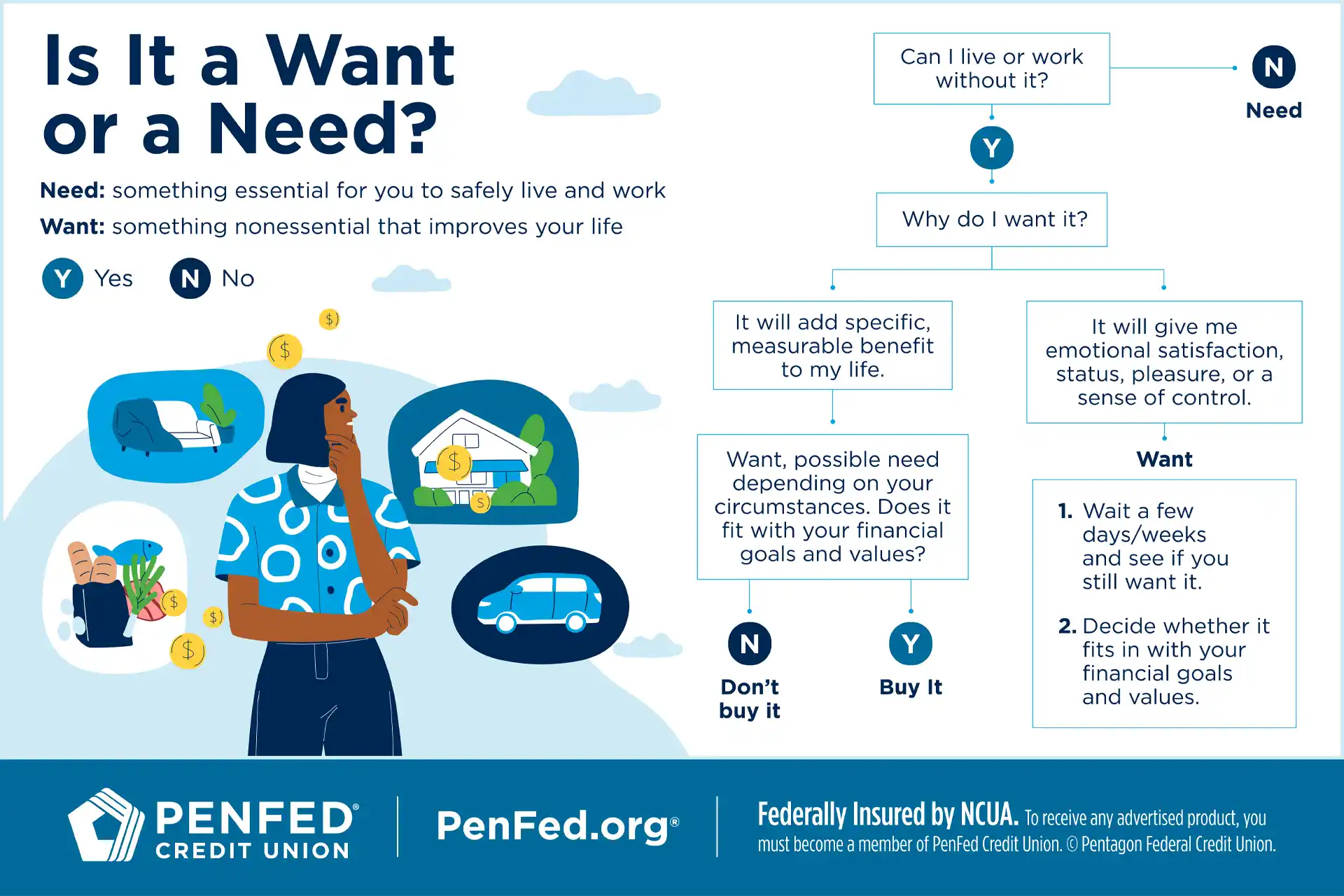
It's important to reflect on your lifestyle and make choices that fit your needs. If you're not sure if something is a need or a want, wait for a bit and see if your desire for it grows or lessens. If you lose interest in the purchase over time, it's probably a want. You can also ask:
- Can I live/work without this?
- Why do I want to purchase this?
- Will this purchase add specific, measurable benefit to my life?
If you're not sure if something is a need or a want, wait for a bit and see if your desire for it grows or lessens.
Examples of Needs vs. Wants
Below is a list of possible needs and wants. Remember, your needs might be slightly different touch to notepad with based on your lifestyle and career. Whether something is a need or want varies from person to person.
| Needs | Wants |
|---|---|
| Safe home | Luxury apartment with gym and pool |
| Smartphone with internet access | Brand new, top-of-the-line phone |
| Clothes | Name brand or designer items |
| Utilities | Fastest WiFi speed available |
| Food | Dinner at a fancy restaurant |
Budgeting for Needs and Wants
Following a budget doesn't mean never getting what you want. Good budgeting ensures your needs are met and you can afford some of your wants. It can be helpful to label needs and wants when setting up your personal budget so you know how much to save in your emergency fund.

Some wants are good for your overall wellbeing. Splurging on music lessons or joining a recreational sports team could reduce your stress, improve your health, and even help you make friends. If you have some wants like these that you want to prioritize, you can subdivide your wants into "wants" and "luxuries" and budget for both.
Many experts recommend following the 50/30/20 budget, where:
- 50% of your income goes to needs
- 30% goes to wants
- 20% goes to savings and debt repayment
Depending on your financial situation, you may need to adjust those percentages. But the general idea of budgeting for needs, wants, savings, and debt repayment is solid. If that strategy doesn't work well for you, try other budgeting strategies like the pay-yourself-first strategy.
Following a budget doesn't mean never getting what you want.
Should I Go Into Debt for a Want?
That depends. Some wants are good investments. Upgrading your kitchen even if everything works will still increase the value of your home. When deciding whether to take on debt for a want like this, the key is to balance the cost of the want against the projected payoff to see if it's worthwhile.
Other wants won't have a monetary payoff, but they will be emotionally fulfilling. Examples might be buying an awesome flatscreen, redecorating your living room, or taking a wild weekend away with friends.
Generally, it's better to save for emotional wants rather than go into debt for them.
Generally, it's better to save for emotional wants rather than go into debt for them. Using a credit card or personal loan, with attached fees and interest, means paying more for your want than it's actually worth. On top of that, the stress of owing could unravel the benefits. If you regret the trip six months down the road because you still haven't finished paying for it, it wasn't really worth it, was it? You could avoid all that by just saving for your want and being patient instead of using credit.
One exception might be if you're trying to build credit. In that case, sometimes paying for a small want using credit and then paying it off quickly can help you establish a healthy payment history. But it's important to check your budget first and make sure you can afford the monthly payments. (And remember, there are healthier ways to build credit without going into debt.)

The Takeaway
Tackling the want monster is a big step toward more responsible spending. But as you practice, you'll find it easier to stick to your budget and maximize your income.
Explore Checking Account Options at PenFed
Discover the diverse offering of products, services, and support available to our members.