PERSONAL FINANCE
Should You Get a Holiday Loan?
What you'll learn: The pros and cons of holiday loans, plus repayment tips.
EXPECTED READ TIME: 8 MINUTES
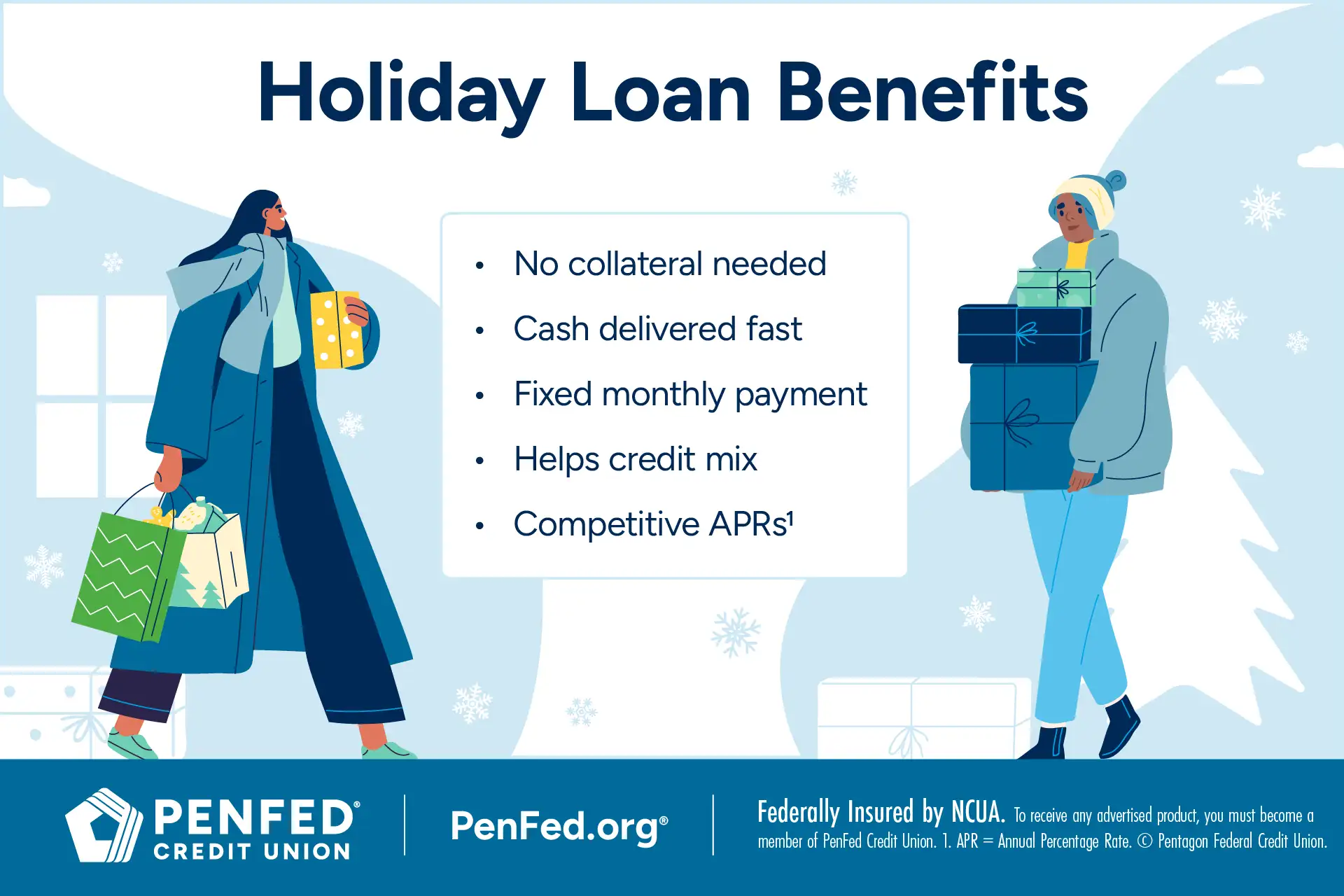
You should use a holiday loan if you want to avoid racking up credit card debt for holiday expenses (assuming you don’t have the cash). The benefits can reach far:
- Lower-interest debt
- Fixed payments
- More diverse credit mix
How Do Holiday Loans Work?
Imagine walking into Walmart on Black Friday, knowing you need to buy gifts for 10 people, and all you have is a credit card with a high interest rate. That knot in your stomach — that's the financial stress we want to avoid.
Cue the holiday loan (sometimes called a Christmas loan).
It’s a type of unsecured personal loan, which means it’s based on your financial strength (your credit score and income) and doesn’t require you to offer up your car or home as collateral. You apply for a specific amount — maybe $1,000 for gifts and a few hundred for travel — and if approved, the lender deposits that lump sum in your bank account.
The main differences between this and a credit card are the repayment structure and interest rate. With a loan, you have a fixed repayment period, usually between six and 60 months (no revolving debt cycle), plus your interest rate is set from day one.

Where Can I Get a Holiday Loan?
Several credit unions and banks offer promotional rates on their personal loans during the holiday rush. And don’t forget online lenders — they offer fast applications and approvals.
Is a Holiday Loan Right for Your Holiday Plans?
Who is this loan for? Think of the parent managing a gift haul for picky teenagers, the solo traveler booking a flight overseas to see family, or the generous host stocking up for a Friendsgiving feast. They need the cash now, want to keep your emergency fund intact, and avoid financial pain (hefty Christmas debt) in the months that follow.
On average, American households spend between $1,000 to upwards of $2,000 during the holidays. Putting that on a credit card can mean months or even years of high-interest payments (that’s bad debt). The emotional toll lingers too — 60% of people who took on debt during the 2024 holiday season reported feeling stressed about it, while 42% confessed they regretted spending so much.
Pro tip: Spreading holiday cheer shouldn’t cost you your calm or your future. If you have good credit, a low introductory credit card offer might beat a loan rate. However, if you’re not sure you can pay off that credit card balance before the intro period ends, then the loan is the clear winner.
Spreading holiday cheer shouldn’t cost you your calm or your future.
What Are the Core Features of Holiday Loans?
Now, let’s take a deeper look at what makes the holiday loan shine. It all comes down to four key components. Explore each one in more detail and see how they compare with other personal loans as well as credit cards.
Holiday Loans vs. Regular Personal Loans vs. Credit Cards
|
Feature |
Holiday Loan |
General Personal Loan |
Credit Card |
|---|---|---|---|
|
Amount |
Tends to be smaller |
Often larger |
Varies |
|
Repayment Term |
Shorter (often 6-24 months) with fixed end date |
Longer (up to 5 years) |
Revolving (no fixed end date) |
|
Approval Timeline |
Designed for seasonal access, 1-2 business days for funding |
Standard processing time, up to 5 business days |
Instant to a few business days |
|
APR |
Lower than store credit cards |
Lower than credit cards, often tied to prime rate |
Variable and typically much higher (average APR in 2025: 22.25%) |
There’s more.
The installment advantage: If your debt is mostly revolving (credit card balances that fluctuate), adding and paying off a holiday loan can help you diversify and strengthen your credit. Read about more ways to improve your credit score.
Other Considerations: Cons of Getting a Holiday Loan
You know the pros — now, onto the not so merry and bright aspects.
Use this fast-fire list to see if the low-interest payments, fast processing times, and predetermined payoff dates are really worth it:
- Fees: Be wary of origination fees (this is an upfront percentage of the loan, usually 1% - 10%) and prepayment penalties. Additionally, missing a payment will incur costs. These charges can add up fast, but they are often less expensive than common credit card fees.
- Temporary credit score dip: Expect a hard credit check, which will knock a few points off your score.
- Overspending trap: Access to a lump sum can tempt you to borrow and spend more than you need. The easy fix? Crunch the numbers before you apply and commit to sticking to them. More on this later.
Remember, no financial product is perfect. It’s essential to figure out what works for you.
Choosing a Holiday or Christmas Loan: What to Compare
Let’s say you’re in the market for a new car. You wouldn't buy the first one you see, right? The same is true for your loan. It’s essential to take your time to find the best deal.
Think about the stakes — a small difference in the annual percentage rate (APR) can mean hundreds of dollars saved over the life of the loan. Transparency also matters. A reputable lender, like a credit union, will spell out every detail from the repayment terms to any origination fees.
5 Questions to Ask Before You Apply
Time for a self-assessment. These questions will help you think through the total cost of borrowing as well as how you plan to manage the new debt.
- Do I have other funding options? If you have extra money from a side gig, a miscellaneous "sinking fund," or credit card rewards, you might want to start with that. It’s cheaper than committing to a new loan.
- How much money do I absolutely need? Don't round up. If you need $500 for Christmas cash, borrow $500. Every dollar you borrow is a dollar you pay interest on.
- Will I still have room in my monthly budget after paying the loan? Look at your post-holiday finances. The payment should feel like it’s doable, not a burden. Let’s say you get a $2,000 loan at 9.99% APR and agree to pay it back over 12 months. Your monthly payment will be about $175. If you can comfortably budget for that $175 payment in January, February, and beyond, you’ve found a smart solution. On-time payments are how you’ll protect your credit score.
- Will taking this loan sideline a bigger financial goal? If the monthly payment forces you to pause retirement savings or postpone a down payment, then the loan may be more costly than you realize. Rethink your holiday budget and explore alternatives like Buy Now, Pay Later services, which let you split the cost of purchases over several weeks or months, often with low or zero interest. It’s like a store layaway.
- Am I funding value or stuff? Be honest about what motivates you to spend. Debt should fund the meaningful things, like essential travel home or a cherished family tradition. You don’t want to look back and realize you’re still paying interest on a trendy, high-cost item that might end up in the recipient’s donation pile.

How to Apply (and What to Expect)
Your budget is good to go, and you’ve selected your lender. Now, for the simple part — applying. The process for a small holiday loan moves quickly.
Here’s the step-by-step:
- Round up all the necessary paperwork: This includes your government ID, recent pay stubs, and two years of tax returns if you are self-employed. Having these ready cuts the waiting time in half.
- Fill out the form: You'll complete an application detailing your income, debt, and the exact loan amount and term you want. Be detail-oriented — lenders will verify the numbers.
- Wait for the credit check: The lender will run a hard inquiry on your credit report. This is a necessary step that determines your interest rate. A good credit score is your ticket to the best rate.
- Review the offer: You’ll typically get a decision within hours to a day. If approved, you'll receive the final loan documents. Read every line. Does the APR match what you expected? Are there fees? Ask any outstanding questions before signing the dotted line.
- Funding: After signing, the funds are securely transferred electronically. The cash usually hits your account in one to two business days. Congratulations!
Top Tips for a Smooth Application
A smooth application means less waiting and a higher chance of approval. To prepare, you need to show the lender you’re a reliable, low-risk borrower.
Here are four things you can do to make your application a breeze:
- Verify your personal information: Make sure the address, income, and job history you put on the application match your supporting documents. Inconsistencies slow everything down.
- Know your score and history: Are you creditworthy? Now is the time to use those free credit monitoring tools from your bank or credit union (PenFed Credit Union members can use PenFed Credit NavigatorTM). Checking your credit score ahead of time lets you anticipate the rate you'll be offered. A score of 670 or higher is generally considered "good." It’s also a good idea to pull a free copy of your credit report. If you find any errors — like an old, paid-off debt still listed as open — get them fixed.
- Use a co-signer: If your credit score is in the "fair" range (typically 580-669), applying with a co-signer who has excellent credit can result in a lower interest rate.
- Address credit issues upfront: If you have a less-than-fair credit score, a recent change in employment, or an unexpected drop in income, be prepared to explain it to the loan officer.
Have a plan that prioritizes on-time payments, protects your credit, and helps you build better habits for the future.
Managing Repayment: Staying on Track After the Holidays
You've eaten the turkey, opened the gifts, and welcomed the New Year. Now, the real work begins. The goal is to eliminate your holiday loan debt before next year's festive season.
Good news — we’ve come up with a few simple strategies to help you do just that.
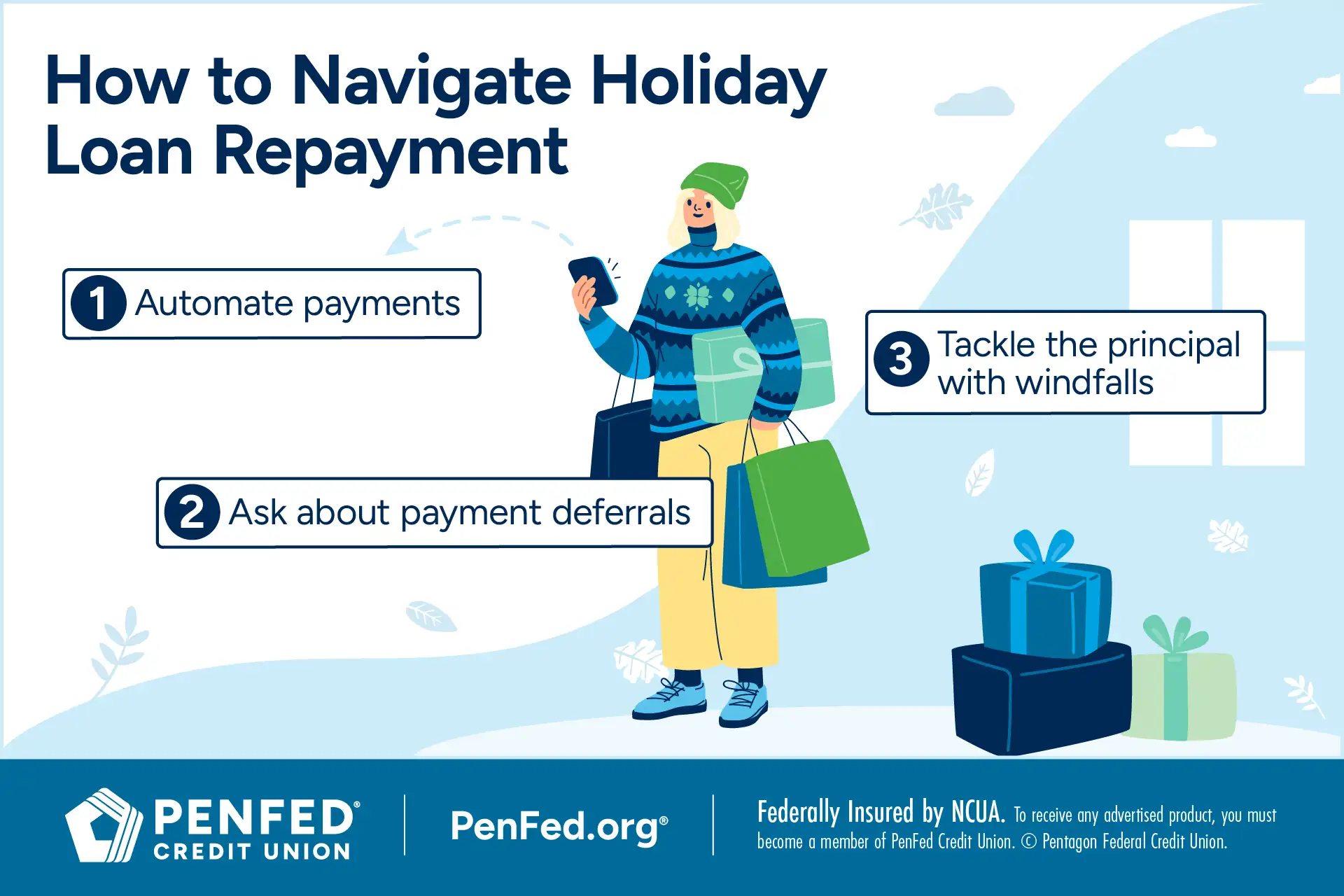
Automate Payments: Set It and Forget It
Call your lender or use the online portal to set up automatic monthly payments. Schedule the payment to hit a day or two after your paycheck clears. On-time payments are the TLC your credit score needs.
Know Your Options for Deferral
Ask your lender if they have a "Skip-A-Payment" option. This allows you to defer a monthly payment (usually once a year, sometimes for a small fee). While it extends the life of the loan, it can be helpful if you’re dealing with an emergency.
Tweak Your Budget
Go through your post-holiday spending and find two easy cuts — maybe one less dinner out or a canceled streaming service. Use those small savings to make extra payments targeting the principal (double-check your loan agreement for prepayment penalties) or start building the upcoming holiday’s sinking fund.
Don’t beat yourself up if you’re not able to pay down your loan by the following holiday season. The important thing is to have a plan that prioritizes on-time payments, protects your credit, and helps you build better habits for the future.
Additional Smart Money Moves
You've assessed your needs and applied for the loan, and now you have the cash to handle everything from gift-giving to hosting. But imagine a world where the holidays arrive, and the pressure is off because you've built the kind of financial stability that lets you skip the loan process.
It’s possible. Follow these hacks:
- Shop smart: Don’t wait until December to buy everything. Shopping early during summer or fall sales is a great way to lower your holiday bill.
- Create an annual financial game plan: If you build your financial plan around predictable expenses (including the holidays), they become just another line item, not an emergency. Start mapping out a plan of your own with our month-by-month financial planning guide and learn how to make New Year’s money resolutions that stick.
- Start a holiday sinking fund: Also known as a Christmas Fund, this goes hand in hand with the previous tip. Open a savings account and name it "Holiday 2026." Put away small amounts each month, perhaps $25-$50. If you want to maximize these savings, consider keeping them in a high-yield savings account (HYSA) where the interest rate is higher than a standard savings account.
- Sell to fund: Go through your closet, garage, or electronics drawer and sell any unused items on Facebook Marketplace, Poshmark, eBay, or to a consignment store. Whatever you earn goes to your holiday fund. Learn how to make one in these four steps.
- Use the round-up-the-change feature: Link your debit card to an app that rounds up every purchase to the nearest dollar and transfers the difference to your holiday sinking fund.
- Ignore the hype: Marketing schemes are designed to trigger impulse buys and create a sense of scarcity. Unpack your holiday spending habits (this means thinking through wants and needs) and establish practices that stop you from falling for aggressive holiday marketing. This might include unsubscribing from store emails or making a rule to wait a couple of hours or days before buying anything nonessential.
- Embrace accountability: Team up with a trusted friend and challenge each other to cut a nonessential expense (like a streaming service or specialty coffee) during your loan repayment period or until you hit next year’s holiday fund target.
Don’t wait until December to buy everything. Shopping early during summer or fall sales is a great way to lower your holiday bill.
FAQs
Here are some quick answers to common questions about funding your holidays the smart way.
It's possible, but your interest rate will be significantly higher than the rates advertised for borrowers with excellent credit. If your score is low, using a co-signer with good credit is the best way to secure a competitive rate.
Yes, these are typically the same type of product. Lenders use different terms for their seasonal personal loan offers. Both are fixed-term, lump sum installment loans.
Always apply through a reputable financial institution like your local credit union, a major bank, or a well-established online lender. A legitimate lender will never guarantee approval without a credit check or pressure you into paying upfront fees over the phone. Learn how to stay vigilant this season.
You may take advantage of a 0% APR introductory credit card if you're sure you can pay off the balance before the promotional period ends. Buy Now, Pay Later services are another great option.
The hard credit inquiry will drop your score by a few points (about 5). Paying the loan off on time will eventually boost your score.
Yes, for large and urgent holiday spending, a loan is best because it offers a lower fixed interest rate and a clear repayment term. This keeps you out of the high-interest, revolving debt cycle that comes with credit cards.
It’s a savings account where you put aside a set amount of money each month or pay period. The goal is to accumulate all the cash you need for holiday expenses before the season begins.
The Takeaway
Now, you know all there is to know about holiday loans and when it’s right to get one.
The difference between a smart borrower and someone who ends up with a financial hangover is simple — know your needs, compare the total cost, automate monthly payments, and build healthy budgeting habits for the future. Use these loans to keep the holiday season exactly what it should be — joyous and debt-free!
Selected Sources:
36% of Americans Took on Holiday Debt, Averaging $1,181 | LendingTree
Credit Scores | MyCreditUnion.gov
What Is a Good Credit Score? | Experian
What Is a Personal Loan Origination Fee? | NerdWallet
Sources last accessed October 2025
Cover Holiday Expenses the Smart Way
Explore flexible, low-rate personal loan options from PenFed.