FINANCE
The 100 Envelope Challenge: How It Works and How Much You'll Save
EXPECTED READ TIME: 6 MINUTES
The 100 envelope challenge is a savings game that helps you set aside $5,050 in 100 days. You number 100 envelopes from 1 to 100, pick one each day, and fill it with that many dollars. Here's how it works, what it costs per day, easier versions to try, and where to keep the money once the envelopes start to fill up.
What Is the 100 Envelope Challenge?
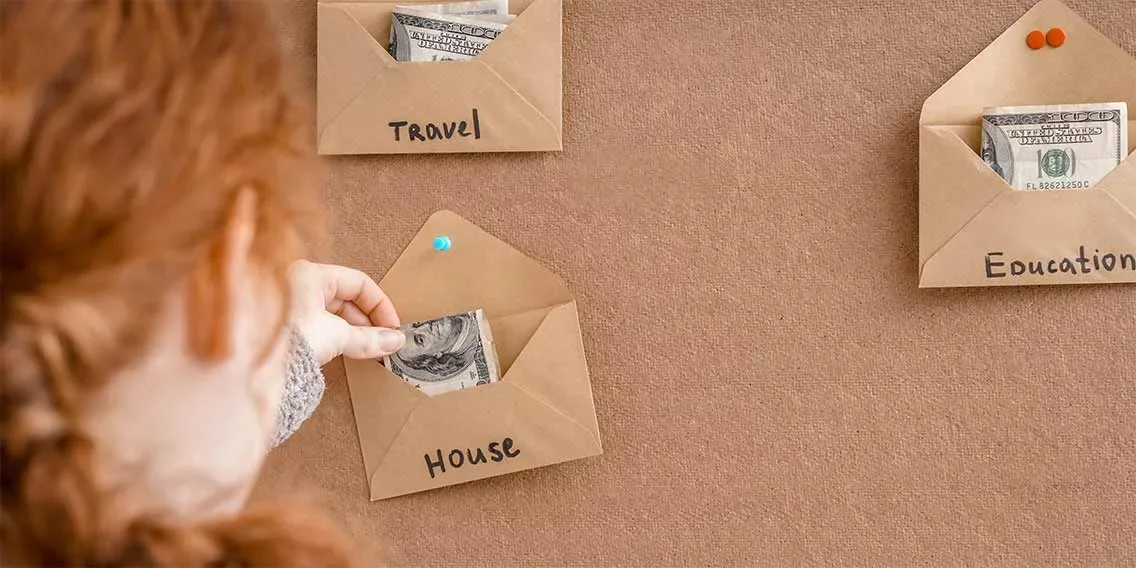
The 100 envelope challenge is a structured savings method that spread on social media as a more visual way to save. Each envelope is labeled with a number from 1 to 100, and that number is the dollar amount you put inside. Because the numbers 1 through 100 add up to 5,050, filling every envelope leaves you with $5,050.
It's different from envelope budgeting, which PenFed explains in its guide to setting up an envelope budget. Envelope budgeting divides money you plan to spend into categories like groceries and gas. The 100 envelope challenge does the opposite: it sets money aside so you don't spend it.
How the 100 Envelope Challenge Works
The classic version takes four steps:
- Number your envelopes. Label 100 envelopes from 1 to 100. A binder with pockets or a printed tracker works too.
- Pick one each day. Draw an envelope at random or go in order. Random draws mix small and large amounts, so most weeks feel manageable.
- Fill it with that amount. Envelope 7 gets $7. Envelope 82 gets $82.
- Move the money to savings. Deposit filled envelopes into a savings account on a set schedule, such as every Friday, so the cash isn't sitting at home.
Over 100 days, the daily amount averages $50.50, which works out to roughly $1,500 a month. Check that number against your budget before you start.
100 Envelope Challenge Variations
If $50.50 a day is more than your budget can handle, or you want a bigger goal, change the pace or the amounts. The total depends on how many envelopes you use and what you put in each one.
|
Version |
How It Works |
Time to Finish |
Total Saved |
|---|---|---|---|
|
Classic 100 envelope challenge |
Fill envelopes numbered $1 to $100, one per day |
100 days |
$5,050 |
|
Weekly pace |
Same 100 envelopes, one per week |
100 weeks (about 23 months) |
$5,050 |
|
Two a day |
Same 100 envelopes, two per day |
50 days |
$5,050 |
|
50 envelope challenge |
Envelopes numbered $1 to $50, one per day |
50 days |
$1,275 |
|
Double-up version |
Envelopes numbered $2 to $200 in $2 steps, one per day |
100 days |
$10,100 |
|
52-week savings challenge |
Save $1 in week 1 and $1 more each week, up to $52 |
52 weeks |
$1,378 |
The 52-week savings challenge is a slower option built on the same idea: you save $1 in week one, $2 in week two, and so on, ending with $52 in week 52. It's a good starting point if daily saving feels like too much.
Pros and Cons of the 100 Envelope Challenge
Pros
- It turns a big goal into small daily steps.
- Filled envelopes give you a visible record of your progress.
- It has a clear finish line, which makes it easier to stay motivated.
- It's flexible: you can slow the pace or shrink the amounts without breaking the habit.
Cons
- If you go in order, the last envelopes are the hardest. Envelopes 91 through 100 alone add up to $955.
- Cash kept at home is not federally insured and can be lost or stolen.
- Money in an envelope doesn't earn dividends or interest.
- At $50.50 a day on average, the classic pace may be too fast for some budgets.
Where to Keep Your 100 Envelope Challenge Savings
Envelopes are a great way to track the challenge, but they're a risky place to keep $5,050. Moving filled envelopes into a savings account at a federally insured credit union protects the money and lets it earn dividends. The National Credit Union Share Insurance Fund, administered by the National Credit Union Administration (NCUA), insures eligible shares at federally insured credit unions up to $250,000 per member, per insured credit union, per ownership category.
How to Do the 100 Envelope Challenge Without Cash
You can skip paper envelopes entirely. Print or write a grid of the numbers 1 to 100. Each day, pick a number, transfer that amount from checking to savings, and cross it off.
A digital version also makes it easy to give the challenge its own home. Many people keep more than one savings account so each goal has a separate balance and the challenge money doesn't mix with other savings.
What to Do With Your $5,050
Decide what the money is for before you start. A clear goal makes the expensive days easier. Common choices include:
- Starting or adding to an emergency fund
- Covering a known expense, like holiday gifts, car maintenance, or annual subscriptions
- Saving toward a bigger goal, like a vacation or a down payment
- Paying down a high-interest balance
If you won't need the money for a while, a Money Market Certificate holds your savings for a set term.
Frequently Asked Questions
You save $5,050. The envelopes are numbered 1 to 100, and those numbers add up to 5,050, so each filled envelope adds its number in dollars to your total. The average envelope holds $50.50.
The classic version takes 100 days, with one envelope filled each day. Filling one envelope a week stretches it to 100 weeks, or about 23 months, and filling two a day finishes in 50 days. The total is $5,050 at any pace.
It can be, if your budget has room for it. The classic pace averages $50.50 a day, or roughly $1,500 a month for just over three months. If that's too much, a weekly pace or the 50 envelope version builds the same habit at a lower cost.
Yes. Instead of paper envelopes, use a printed or digital grid of the numbers 1 to 100. Each day, pick a number, transfer that amount from checking to savings, and cross the number off.
Keep it in a federally insured savings account rather than at home. Cash in envelopes can be lost or stolen and doesn't earn anything, while share accounts at federally insured credit unions are protected by the National Credit Union Share Insurance Fund up to $250,000 per member, per insured credit union, per ownership category.
The 100 envelope challenge builds savings: every envelope you fill is money set aside. Envelope budgeting manages spending: you divide money you plan to spend into categories like groceries and gas, and stop when an envelope runs out.
The Takeaway
The 100 envelope challenge turns a $5,050 goal into 100 small decisions. Pick a pace your budget can handle, decide what the money is for, and move each filled envelope into an insured savings account so your progress stays safe.
Give Your Envelopes a Safer Home
Move your challenge savings into PenFed Premium Online Savings, with a $5 minimum to open and no monthly maintenance fees.