FINANCE
How Can I Avoid Overspending This Holiday Season?
What You’ll Learn: How to avoid overspending during the holidays.
EXPECTED READ TIME: 11 MINUTES
The holidays are a time for joy, not financial stress. You can stay in budget during the holidays by:
- Adopting a proven budgeting strategy and sticking to it
- Accounting for every expense related to the holidays, not just gifts
- Choosing money-free gifts when possible
And, of course, by following this guide! With the right outlook and set of spending hacks, we’ll help you take control of your finances and enjoy the season to the fullest — no regrets.
Unpack Your Holiday Spending Habits
You may or may not remember half the things you bought while caught up in the whirlwind of the family gatherings and good cheer, but your January credit card statement is a harsh reminder that you got swipe happy. If this sounds like you, and you want to avoid that dreadful feeling, the first step is to understand what drives your spending.
The first step to budgeting is to understand what drives your spending.
Why Do You Spend What You Spend at the Holidays?
Think about the emotional and psychological forces at play. For many of us, holiday spending is wrapped up in tradition and obligation. Maybe you grew up believing that the perfect Christmas morning requires a mountain of presents under the tree, or you’ve never not bought a gift for your neighbors. This mindset can rob you of your ability to say no when you actually need to.
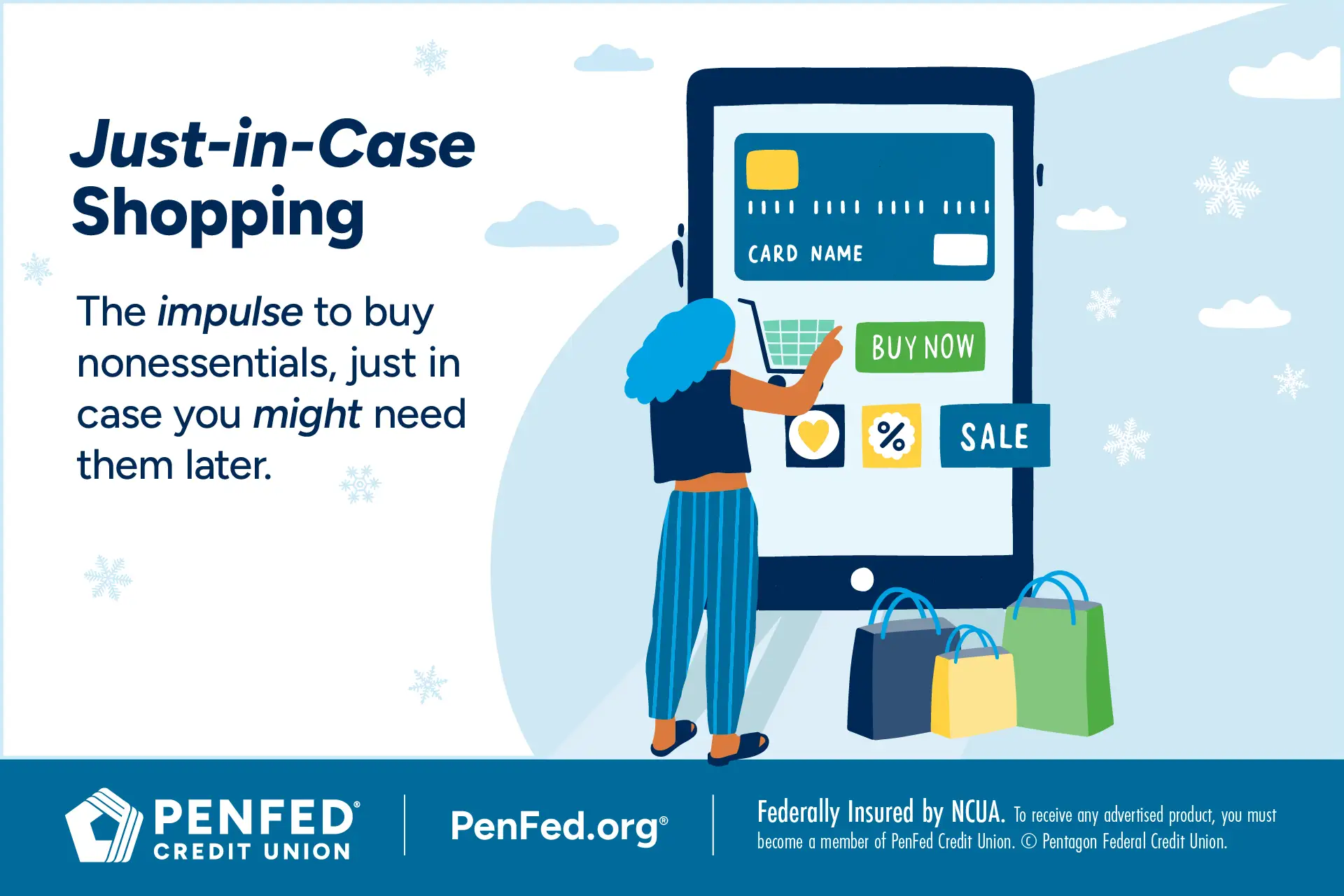
Or maybe, it's a feeling of scarcity. You’re convinced that you need to buy that sweater or TV now because the price is “right” and it will be gone tomorrow. This is what we call "just-in-case" shopping. It’s the sneaky villain of the season, and you’re most prone to it during major events like Black Friday sales.
Did you know?
- Holiday spending has been on the rise, with the U.S. Census Bureau reporting a record high of $994.1 billion in 2024.
- A whopping 197 million people hit the stores (physical and digital) over Thanksgiving weekend in 2024.
- 38% shoppers planned to spend over $1,000 on holiday gifts in 2024.
- According to a 2025 Bankrate survey, more than half of all shoppers (54%) admitted to making impulse buys last holiday season.
- In 2023, the average cost of celebrating Christmas per household was $1,205.
A latte here, a cute ornament there, a few rolls of wrapping paper — these tiny transactions feel harmless, but they pile up fast.
What Are Your Holiday Stressors?
Where do you feel the most pressure to spend? For most people, it's one of these areas:
- Gifts
- Travel & hosting
- Big-box sales
- Small, out-of-budget spends
Gifts
The most obvious one. You start with your immediate family, then add cousins, coworkers, and your kid's teachers. Or maybe, you just can’t decide on just one item. That’s how you end up with an anything-goes wish list.
Travel and Hosting
Whether it's a flight to see family, gas money for a road trip, or drinks for your first NYE party, these costs are a major part of our holiday plans.
Big-Box Sales
Doorbuster deals can trigger a fear of missing out, pushing you to buy the unnecessary.
Small, Out-of-the-Budget Spends
It’s not always the big purchases that do the damage. A latte here, a cute ornament there, a few rolls of wrapping paper — these tiny transactions feel harmless, but they pile up fast.
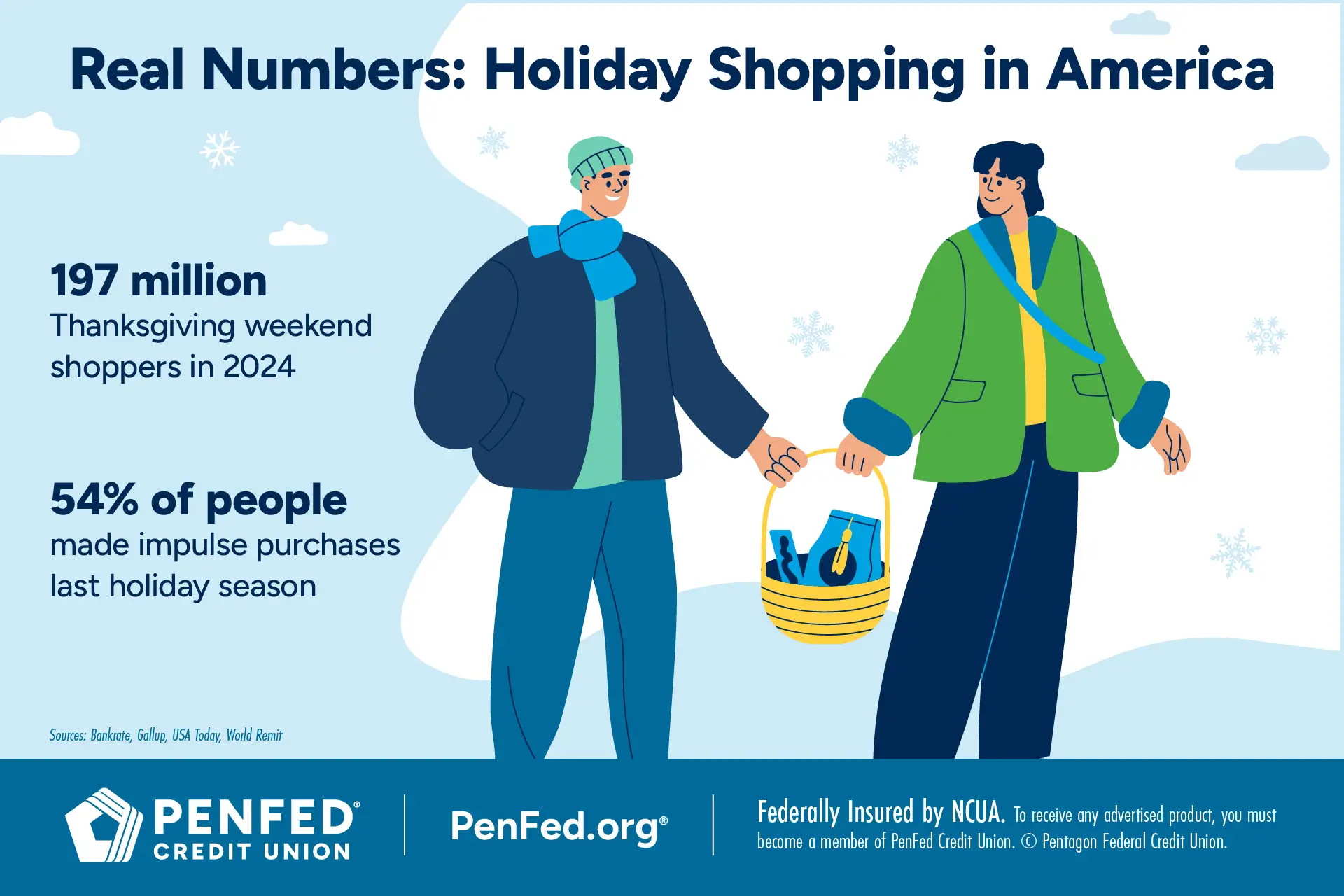
Did you know 197 million people participated in Thanksgiving weekend shopping?
How Can I Build a Holiday Budget I’ll Stick To?
Let’s get practical with your spending. Your budget should be a tool that empowers you, not a list of restrictions that takes the fun out of shopping. Here are a few simple ways to keep your money where it belongs, your peace of mind intact, and your holiday spirit alive.
The Five-Bucket Method for Holiday Budgeting
The key to a solid holiday budget is to break it down into manageable, easy-to-track categories. Our five-bucket method helps you do just that. The five buckets for holiday budgeting are:
- Gifts
- Hosting
- Travel
- Decorations
- Surprises
Let’s explore these categories in more depth.
1. Gifts
This is your big one. Set a total amount for gifts and then break it down by recipient. For example, if you have a total of $500 for gifts, you might allocate $50 to your mom, $30 to your best friend, and so on. Fit yourself in there if you can.
Once you have an exact number for each person, write it out with a pen and paper and keep your list with you when you shop, crossing off as you go. You’ll be able to see the bigger picture, and you’ll avoid forgetting you still have to shop for 6 other people when you’re in the zone shopping for any one of them at a time.
2. Hosting
This bucket covers everything from a catered Hanukkah or Kwanzaa dinner to the cookie swap at work.
Think about it — no one wants to forget the gravy or sit down to dessert and realize their kid’s favorite pie isn’t there. Get your family to decide on a holiday menu. If you need to cut back, turn to generic ingredients or compromise in simple ways. For example:
- Go for a turkey breast instead of a whole turkey.
- Make food from scratch instead of buying pre-made.
- Eliminate overlap, like having roasted sweet potatoes and sweet potato casserole.
3. Travel
Whether you're heading home or renting a cabin with friends, gas money, flights, rideshares, and accommodations all go here. Use price tracker websites and alerts to land the best deal.

4. Decorations
This is for all the festive extras, from that new set of lights to the quirky inflatable snowman for your front yard. Just because your décor has seen better days doesn’t mean you’ve got to deck your halls with brand-new.
Here are four easy ways to refresh your holiday decorations for next to nothing:
- If you have an old wreath, strip the hoop of flourishes and add new ones you’ve thrifted or found outside (do you live near any evergreen trees?).
- Look around for little-used sheets, blankets, or curtains to cut and sew into table runners.
- Host a pre-holiday swap meet with friends to trade décor you’re tired of for something different.
- Got some old popcorn in the back of your pantry? Never underestimate the charm and fun of a making a classic popcorn garland.
And just like that, you’ve got the fresh, new look you wanted for little to $0.
5. Surprises
Overestimate your costs. Build a small stash of cash for those last-minute Secret Santa buys or the to-do list item you missed. Don’t skip this part! This buffer keeps your budget from breaking. Any leftover funds can go toward next year’s holiday spending.
Pro tip: Setting up a spreadsheet may not be as relaxing as putting together your end-of-year playlist, but it’s the best way to stay on top of these spending buckets. As you check items off your shopping list, log your purchases in the sheet — or better yet, let a personal finance app do the work for you.
A buffer keeps your budget from breaking and any leftover funds can go to next year’s holiday spending.
Cash Flow Hacks: Set Saving and Spending Limits
Now for the important part — making sure you actually have money in those buckets. Start by auditing your income to know what’s coming in (include side hustle earnings), then dive into these creative ways to budget:
The 50/30/20 Rule
This is a common budgeting method that can be applied to holiday spending.
- Allocate 50% of your holiday budget to needs such as gifts for close family.
- Allocate 30% to wants like that new Christmas tree you've been eyeing.
- Allocate 20% to savings for a future trip or to pad your emergency fund.
The Envelope Method
Label separate envelopes with each of your holiday spending categories and fill them with the cash you've budgeted. When the envelope is empty, your spending for that category is done. Learn more about envelope budgeting with our guide.

Save $100 per Week
This is a great way to save if you're a couple of months out from the holidays. Instead of transferring a lump sum to your savings account at the end of the week, you could put away a little bit each day, increasing the amount as you go until you hit your goal of $100 per week. If you can’t set aside $100, $50 will work just fine. It’s all about getting a head start. By the time the festivities roll around, you’ll have a nice chunk of change to cover planned expenses.
The One-In, One-Out Challenge
For every gift you buy, put the same amount of money into your savings account. This lets you build up next year’s holiday fund or pay yourself for your hard work.
The early bird advantage: None of this works if you’re not strategic with timing. Figure out how long it’ll take you to save what you need. If feasible, start setting aside money once summer camp is paid off and other summertime obligations are out of the way. Deposit cash on the go or automate those transfers so you have one less thing to do. Then, start shopping for deals early. Many retailers kick off their holiday sales in October, allowing you to get ahead of the Black Friday and Cyber Monday rush.
Many retailers kick off their holiday sales in October, allowing you to get ahead of the Black Friday and Cyber Monday rush.
Additional Holiday Savings Tips
Some people live for holiday retail therapy, while others want to buy the first thing they see and end their misery. If you're the latter, the rush to finish could be costing you. This is where a little strategy comes in.
Do a Quick Price Check
The internet has ushered in a golden age of comparison shopping. With a few clicks, you can find prices at most major retailers. Many smaller shops also have prices on their websites.
Leverage Discounts
Ask for a teacher, military, or senior discount, see if your credit union or employer offers similar deals, and find out if your credit card gives you cashback at specific retailers. If you haven’t already, now's the time to bust out that store credit card and put your rewards to work.
Get Thrifty, Buy Used
If your child has been begging for a guitar or a gaming system, your neighbor may be selling just what you need at a fraction of the retail price. Explore online marketplaces that connect you with locals selling or swapping gently used goods. You can also visit consignment and pawn shops to find cool vintage items.

4 Ideas for Budget-Conscious Celebrations
What if this year’s most cherished moments were the ones that don’t break the bank? It's time to swap out some old habits for new traditions that are big on fun and low on cost.
Gift Experiences
Experiences last longer than things. Instead of another sweater that might get lost in the closet, give your favorites an experience they won’t forget. Think concert tickets, a museum pass, a meal prep subscription, or even a personal finance course.
Team Up for a Potluck
‘Tis the season to lean on your community. Instead of bearing the burden of a massive meal, host a potluck where everyone can showcase their favorite dish or one from their culture.
Support Local Vendors
Have you heard of Small Business Saturday? It’s an opportunity to make a difference with your dollars. Instead of getting caught up in the big box store chaos of Black Friday, head to local artisan markets and small boutiques. There, you’ll discover one-of-a-kind gifts. These finds may be pricier than mass-produced items, but their high quality means a lower cost per use. And your money goes right back into the community you love.
Instead of getting caught up in the big box store chaos of Black Friday, head to local artisan markets and small boutiques.
Suggest a Secret Santa Exchange
Skip buying gifts for everyone in your friend group. This year, organize a Secret Santa exchange. You'll still get the joy of giving, but you'll only have to purchase one thoughtful gift. With a price limit and a dash of mystery, it's the perfect way to make budgeting part of the fun.
How to Sidestep Overspending Traps and Holiday Guilt
Remember those emotional spending triggers we discussed? Stop them in their tracks with these three simple tricks.
1. Wait It Out
Pause before you tap your card. Give yourself at least a week or up to a month if you can (learn more about the 30-day rule and managing a volatile income here). During this time, ask yourself some questions to help you decide (we’ve done the work for you with the table below). Sometimes, that wish list item loses its magic the moment you walk away. However, if you still want it after reflecting and can afford it, then make it yours.
2. Ditch the Guilt: Set Expectations
Let’s be honest. Many of us feel tons of pressure to spend a lot of money on gifts and celebrations. We think that if we don’t, we’ll disappoint our loved ones. But here's the truth — your love is not for sale, and you can show you care without going into debt.
The key is to set expectations with family and friends. Tell them ahead of time that you're focusing on meaningful, handmade or experience-based gifts.
It’s okay to say, "I've done enough." Your peace of mind and financial wellbeing are far more valuable than a pile of gifts forgotten by the New Year.
Santa Doesn’t Have to Bring Everything
While most adults will appreciate your honesty and thoughtfulness, having this talk with your kids might feel a little awkward. Sure, you want to give them the world, but loving your child and playing Santa are two different things. Just because their holiday wish list is a mile long doesn’t mean you have to go that exact distance. Prioritize items you know your children will genuinely enjoy and that fit your budget. The holidays can be a great time to teach them about needs versus wants — consider making a fun little activity of it.
3. Give the Gift of Time
We've all felt the guilt of not seeing our tribe enough. The holidays are a good time to turn that feeling around. Instead of adding another item to their collection, give the most valuable present of all — your time. A 2024 study suggests it's what many of us are craving. Set aside a day to do something you and your loved one enjoy.
Ways to Stay on Track, From Black Friday to the New Year
When it comes to budgeting, a set-it-and-forget-it approach doesn’t work. You must check in regularly.
Make Course Corrections Without Drama
Let's face it — between the tempting ads and perfectly curated storefronts, it’s easy to get sucked into an overspending spiral. Don’t beat yourself up about it if you do. Follow this three-step plan to get your budget back on track.
The Holiday Budget Check-In Guide
- End-of-the-week review: Set aside 15 to 30 minutes each week to go through everything. This helps you catch overspending early and make adjustments.
- Balance out your categories: If you've gone over in one category, look for ways to pull back in another. For example, if you spent a little too much on gifts, you could make a few more meals at home or postpone travel. A little reorganization goes a long way. Plus, your surprise bucket is there for a reason.
- Schedule a mind break: Budgeting is work. If you're feeling stressed or overwhelmed, pause, take a deep breath, and come back to it later that week. Remember why you started this in the first place — to have a joyful, stress-free holiday season.
Carry Lessons Into the New Year
The best part of this journey is that the skills you pick up this season will stick with you for life. Every time you track your spending, say no to an impulse buy, stick with something old, or get creative with handmade projects, you’re investing in your future.
FAQs
Got even more questions about holiday spending like what’s the most expensive holiday? You're not alone. Here are some quick facts to help you plan your celebrations with confidence.
Experts anticipate a 5% drop in holiday spending from 2024 to 2025. This indicates a shift from spending big to spending well. People are getting smarter about their money, prioritizing value, and looking for deals to make their dollars go further.
While it varies, many households spend around $1,000 to upwards of $2,000 on gifts, food, travel, and other holiday essentials. Just remember, this is an average — the best budget is the one that fits your financial situation.
After back-to-college shopping, the winter holidays take the top spot. Individuals celebrating spend an average of $875, compared to $274 for Mother's Day.
The easiest way to figure out your number is to start with the total amount you're comfortable spending and can afford without going into debt. From there, use the five-bucket method and 50/30/20 rule to strike the right balance for you.
The Takeaway
There you have it. Think of this guide as a personal invitation to a less-is-more holiday season. Beyond the price tags, what truly matters is that you understand your spending habits and keep them in check. With that outlook, you’ll set yourself up for financial success all year round.
Go ahead and start your plan today — future you will be glad you did!
Selected Sources:
Bankrate’s 2025 Holiday Spending Report | Bankrate.com
Black Friday, Cyber Monday Shoppers Exceed Expectations Both in Stores and Online | Usatoday.com
Holiday Outlook 2025, A Seasonal Remix: Value, Meaning and Generational Shifts | Pwc.com
Top Shopping Holidays | Nrf.com
U.S. Consumers Plan Generous Holiday Spending | News.gallup.com
Sources last accessed September 2025
Get Your Money Right With PenFed Checking
Track your spending with our mobile app to unwrap a stress-free holiday.