

MORTGAGE KNOWLEDGE CENTER
PenFed Mortgage with Confidence
MORTGAGE
The Benefits of an FHA New Construction Loan
What You'll Learn: What an FHA construction loan is, and how it can help you build your dream home.
EXPECTED READ TIME: 8 MINUTES
February 29, 2024 | Updated January 2, 2025

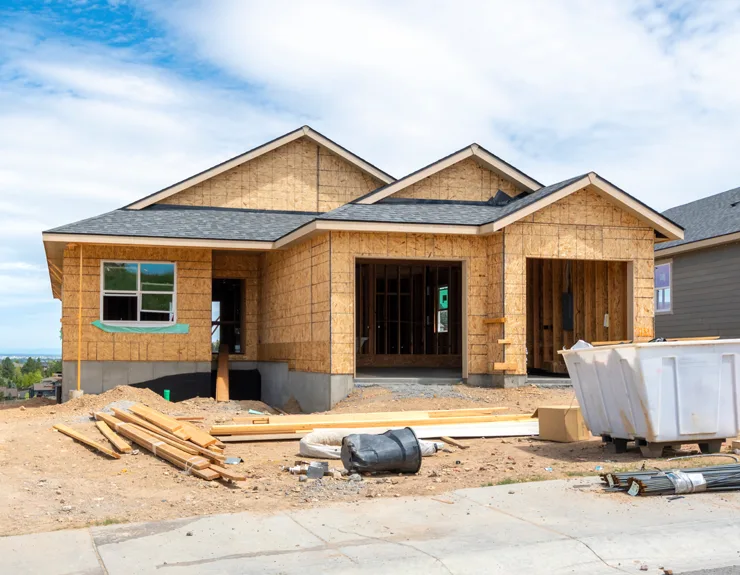
Many homebuyers dream of their perfect home, but finding it is easier said than done. And the ongoing housing supply shortage has made it even more difficult. If you have been house hunting with no luck, you may find yourself asking, “If I cannot find my dream home, maybe I should build it?”
Buying land and building a house from the ground up can be an extensive and expensive process. Most homebuyers may feel that the option is out of reach. However, an FHA new construction loan can help turn your home ownership dreams into a reality.
What is a new construction FHA loan?
You cannot build a home with a regular mortgage loan as there is no existing residence in place to act as collateral. For new builds, you would typically use a construction loan. These loans are short term, equipped with a one-year term covering the costs associated with constructing a house. Once construction is complete, this type of loan usually provides an option for borrowers to convert it into a long-term mortgage.
An FHA construction loan operates similarly to traditional construction loans. They are insured by the Federal Housing Administration (FHA) and cover costs for land purchases, building materials, contractors, plus other labor and supplies. Borrowers then have the option to roll the costs of construction into an FHA mortgage once building is done—essentially combining two products into one.
There are two types of FHA construction loans borrowers can choose from:
- FHA construction-to-permanent loans finance ground-up construction of a new home, providing you with the funds to purchase land and build. Then it converts to a permanent FHA mortgage after the home is built. Unlike some standard construction loans you only go through the closing process once on an FHA construction-to-permanent loan.
- FHA 203(k) loans are also known as mortgage rehab loans. This type of loan is used to fund the purchase of an existing house and covers the cost of extensive renovations. You can purchase and upgrade a home or renovate the home you already own through a single fixed-rate or adjustable-rate mortgage. It’s important to note that there are two types of 203(k):
a. The standard 203(k) finances heavy-duty renovation projects that cost $35,000 or more. It also requires the borrower to utilize the services of an FHA-approved 203(k) consultant.
b. The limited 203(k) covers the costs of minor remodels and non-structural repairs that cost less than $35,000. You may wish to work with a 203(k) consultant, but it is not required.
FHA construction loans are similar to other FHA loans, as they were created to be more accessible to borrowers than traditional construction loans and mortgages.
How to get an FHA construction loan
Though the borrower requirements are the same as traditional FHA mortgages, FHA construction loans have a few additional qualifications a borrower must meet. These requirements include:
-
Minimum credit score of 580 (some lenders may require a score of 620)
-
Maximum debt-to-income (DTI) ratio of 43%
-
Minimum down payment of 3.5% (may be higher depending on your credit score)
-
Documents verifying at least two years of employment and income
-
Recent bankruptcies within the last 12 months require additional underwriting review by the lender
-
Desired loan amount does not exceed FHA loan limits
-
Documents proving you are working with a licensed contractor
-
Building plans for lender to review
Remember that FHA loans of any type require borrowers to pay a mortgage insurance premium (MIP). The up-front cost is typically 1.75% of your loan amount and has an annual charge around 0.55% of the loan, paid monthly, but can be even lower with a larger down payment.
All FHA construction loans also have property requirements that are important to keep in mind as you search for land to purchase, including:
-
Property is subject to FHA inspection
-
The loan cannot exceed the county’s maximum loan limit
-
Physical location of the property must be approved
-
Type of home or building project must be approved
How does a new construction FHA loan work?
No matter which type of FHA construction loan you decide to move forward with, you must apply through an FHA-approved lender. Qualified lenders who offer these products can be found listed on the U.S. Department of Housing and Urban Development’s (HUD) website.
While finding your lender is an important step, it is not the first. FHA construction loans work as follows:
-
Find your plot of land: Before you can move forward with any FHA construction loan, you will have to find the land you want to build your home on. It can be land you already own and are paying off with an existing loan, or property you wish to acquire as a part of the building process. However, the most important thing is to ensure that the land you want to build on is already vacant and does not have an existing structure that needs to be torn down.
-
Get pre-qualified: Like a traditional mortgage, you will need to be pre-qualified with an approved lender before you are able to finalize a budget for your construction project and building plans. This is a crucial step, as pre-qualification will provide you with an estimate of much you can afford to borrow.
-
Hire your builder: While you will not be required to hire a builder or contractor before obtaining loan approval, it is a good idea to get a head start. Not all builders will agree to work on FHA construction loan projects, which may narrow your options. It is smart to hire a builder who has worked with the FHA construction loan program before as they’ll have a better understanding of working on projects backed by the federal government.
-
Get approved for the loan and break ground: As soon as your lender and builder have agreed on the construction plans, an appraisal will be ordered to determine the property and home’s value once construction is complete. As this occurs, your official loan application will go through final evaluation. Your lender will set up your title, calculate final numbers for underwriting, and confirm your homeowners insurance. Once your loan closes, the building process begins! Your loan funds will remain in an escrow account, and like other construction loans, the builder will be paid in installments throughout each phase of construction.
After your new home is built and ready, your FHA construction loan will convert into a permanent mortgage.
Advantages and considerations of new construction FHA loans
Advantages of using an FHA new construction loan
-
Accessible to first-time buyers
-
Only require a 3.5% down payment, providing borrowers with additional funds for construction
-
One loan covers purchase of land, home construction, and financing
Considerations of using an FHA new construction loan
-
Borrowing limits protect you, but may be inconvenient for borrowers who want extra luxuries (meaning you may require additional funding down the line for renovations).
-
FHA loans require borrowers to pay for mortgage insurance, plus an up-front fee worth up to 1.75% of the loan amount and an annual premium that can’t be waived once equity is built.
-
More requirements are imposed, such as specific appraisal health and safety requirements.
Alternatives to New Construction FHA Loans
Of course, there are alternative construction loan options available for borrowers to choose from. Some are federally backed or sponsored via state and county programs. There are also private construction loans that may offer better terms if you are able to meet their requirements. Here are a few alternatives you may want to consider:
-
Conventional construction loans are offered by private lenders and banks, but often require a 20% down payment.
-
State and local programs may be available for borrowers with a moderate income through nonprofit organizations or local housing authorities.
-
Fannie Mae and Freddie Mac construction loans include products to help finance new construction builds or funding options for home renovations/improvements.
-
USDA construction loans are administered by the U.S. Department of Agriculture to low- and moderate-income buyers looking to build a house in eligible rural areas.
-
VA construction loans are only available to military members and veterans. They are guaranteed by the U.S. Department of Veteran Affairs. No down payment or mortgage insurance is required.
FAQs about new construction FHA loans
How long does the FHA loan approval process typically take? Generally, it takes 30 to 45 days from submitting your FHA construction loan application to closing. In some cases, it may extend up to 60 days due to paperwork delays or appraisal issues.
What is the required credit score minimum for an FHA construction loan? The minimum credit score requirement outlined by the FHA is 500 with a 10% down payment, and 580 with a 3.5% down payment. However, many lenders who offer FHA loans typically require a minimum credit score of 620. Check with your lender to determine their specific requirements.
Why choose a new construction FHA loan for your home project
Choosing to build your dream home from the ground up can be a thrilling venture. But the process may seem too daunting for many borrowers. However, an FHA construction loan provides you the opportunity to construct the home you have been waiting for at a reasonable cost.
Rest assured, with the right lender helping you, the house of your dreams is within reach.
For more information about PenFed Mortgages:
PenFed Mortgage:
855-931-6499
SIMILAR ARTICLES
 Will a Prequalification or Preapproval Affect Your Credit Score?
Find out - What is prequalification vs. preapproval? How will a credit check affect your credit score? Will a prequalification help you when you put an offer in on a home?.
 How Much House Can You Afford? And How Do You Figure It Out?
Learn about how to use a mortgage affordability calculator and other factors that go into a home loan.
 How Do I Improve My Credit Score?s
You might be asking yourself; how do I improve my credit score? Follow these tips to manage finances and watch your credit score grow.
 10 Reasons FHA Loans and Credit Unions Go Great Together
Discover the advantages of credit union FHA loans. Explore 10 reasons credit unions may be the best option for you.
Home Buying Steps
Mortgage Products
Disclosures
*Conventional Loans
Except for holidays, rates are updated Monday through Friday at 10:15am EST. The advertised rates and points are subject to change. The information provided is based on 1.125 discount point, which equals 1.125 percent of the loan amount, and assumes the purpose of the loan is to purchase a property with a 30-year, conforming, fixed-rate loan. Loan amount of $400,000; loan-to-value ratio of 75%; credit score of 760; and DTI of 18% or less. The property is an existing single-family home and will be used as a primary residence. The advertised rates are based on certain assumptions and loan scenarios, and the rate you may receive will depend on your individual circumstances, including your credit history, loan amount, down payment, and our internal credit criteria. Other rates, points, and terms may be available. All loans are subject to credit and property approval.
Rates quoted require a loan origination fee of 1%; not to exceed $1,995. Speak to a PenFed Mortgage Loan Officer for additional details.
**FHA Loans
Except for holidays, rates are updated Monday through Friday at 10:15am EST. The advertised rates and points are subject to change. The information provided is based on 1.0 discount point, which equals 1.0 percent of the loan amount, and assumes the purpose of the loan is to purchase a property with a 30-year, conforming, fixed-rate loan. Loan amount of $400,000; loan-to-value ratio of 96.5%; credit score of 760; and DTI of 18% or less. The property is an existing single-family home and will be used as a primary residence. The advertised rates are based on certain assumptions and loan scenarios, and the rate you may receive will depend on your individual circumstances, including your credit history, loan amount, down payment, and our internal credit criteria. Other rates, points, and terms may be available. All loans are subject to credit and property approval.
Rates quoted require a loan origination fee of 1%; not to exceed $1,995. Speak to a PenFed Mortgage Loan Officer for additional details.
***VA Loans
Except for holidays, rates are updated Monday through Friday at 10:15am EST. The advertised rates and points are subject to change. The information provided is based on 1.125 discount point, which equals 1.125 percent of the loan amount, and assumes the purpose of the loan is to purchase a property with a 30-year, conforming, fixed-rate loan. Loan amount of $450,000; loan-to-value ratio of 95%; credit score of 760; and DTI of 18% or less. The property is an existing single-family home and will be used as a primary residence. The advertised rates are based on certain assumptions and loan scenarios, and the rate you may receive will depend on your individual circumstances, including your credit history, loan amount, down payment, and our internal credit criteria. Other rates, points, and terms may be available. All loans are subject to credit and property approval.
Rates quoted require a loan origination fee of $995.
****Jumbo Loans
Except for holidays, rates are updated Monday through Friday at 10:15am EST. The advertised rates and points are subject to change. The information provided is based on 1.5 discount point, which equals 1.5 percent of the loan amount, and assumes the purpose of the loan is to purchase a property with a 30-year, non-conforming, fixed-rate loan. Loan amount of $1,009,000; loan-to-value ratio of 70%; credit score of 760; and DTI of 18% or less. The property is an existing single-family home and will be used as a primary residence. The advertised rates are based on certain assumptions and loan scenarios, and the rate you may receive will depend on your individual circumstances, including your credit history, loan amount, down payment, and our internal credit criteria. Other rates, points, and terms may be available. All loans are subject to credit and property approval.
Rates quoted require a loan origination fee of 1%; not to exceed $1,995. Speak to a PenFed Mortgage Loan Officer for additional details.





Routing #256078446
©2026 Pentagon Federal Credit Union