YOUTH FINANCE
For Parents: How to Set a Savings Goal
Expected read time: 6 minutes
Age group: 6-18 years old
Teaching kids to save money lays the groundwork for healthy financial habits later in life. Learn how to help your child define goals, create plans to reach those goals, and develop important money management skills with this handy guide.
How Kids Benefit from Setting Savings Goals
Saving is an important part of personal finance. It helps us avoid unexpected debt, improve our cash flow, reach financial goals, and more. Unfortunately, it’s a skill many of us don’t learn until later in life. Teaching your child the importance of saving from a young age will help them:
Appreciate the value of money
Understand that money is earned and does not come easily
Develop personal responsibility and discipline
Cultivate patience and perseverance
Teaching your child the importance of saving from a young age will help them appreciate the value of money.
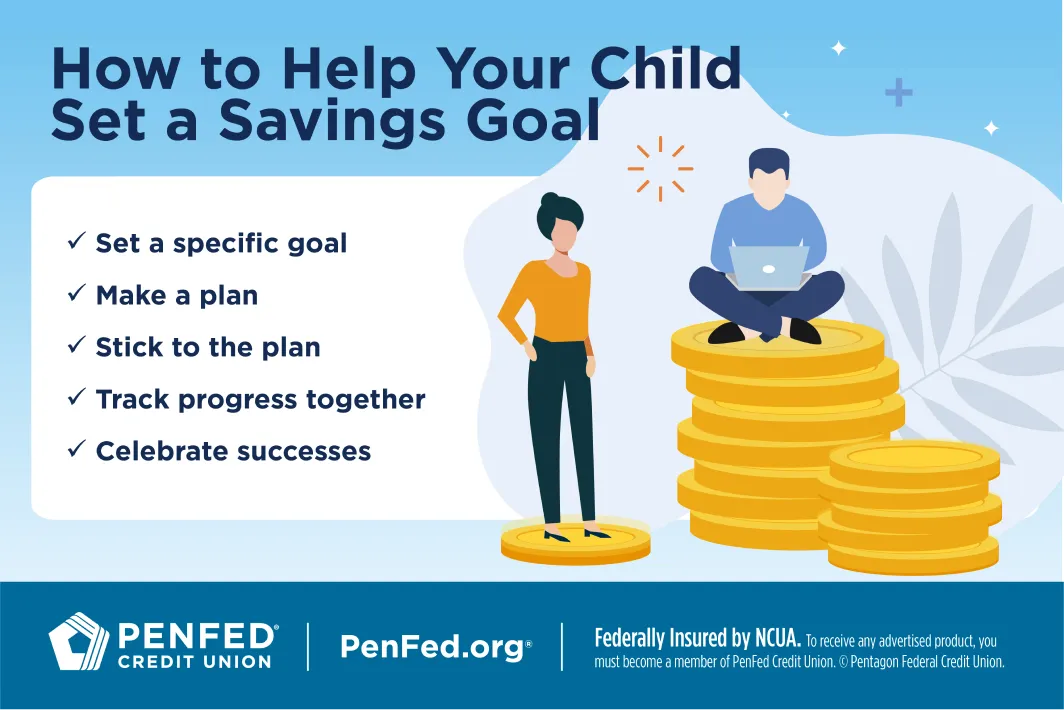
How to Help Your Child Set a Savings Goal
Your child may need help when they first start setting goals. Below are simple steps you can go through together to start them on the right track.
Set a Specific Goal
A good goal is one that motivates your child, so encourage them to choose what they’re saving for. Maybe it’s a new video game or musical instrument. If the item they want has different models or editions, clarify which one they want so you’re setting goals based on the right price. Whatever it is, the goal needs to be expensive enough to be challenging and exciting enough to be motivating.

Bonus Tip:
Sometimes it’s more fun to save for an experience than a thing. You can let saving itself be the goal and celebrate reaching it by doing something fun together. This keeps the focus on saving instead of spending, and you’ll enjoy some quality time.
The goal needs to be expensive enough to be challenging and exciting enough to be motivating.
Make a Plan
Once your child has decided what they’re saving for, it’s time to discuss the price. Talk to them about sales tax and help them calculate the tax on the item they want so they don’t come up short later.
Next, ask your child how soon they’d like to buy their new item. This will help them figure out how much money they need to save weekly or monthly.
Many children benefit from putting down a goal on paper. It helps them remember the steps of their plan, track their progress, and stay focused. Let them write or draw the goal — whatever works for them — and then display it somewhere in their room to keep it top of mind.
Many children benefit from putting down a goal on paper.
Figure Out Where Money Is Coming From
Your child needs income so they have something to save. One source of income could be an allowance you give them in exchange for completing chores. If you decide to offer an allowance, be clear about your expectations.
Write down a list of chores you want them to complete, when they need to be done, and how much they’re worth. This will help your child stay engaged with their savings goal. Another option is to help your child set up a small business. A small business will:
Teach kids good money habits
Build their confidence and social skills
Foster independence
Help them set long term and ongoing savings goals
If you decide to offer an allowance, be clear about your expectations.
Decide How and Where to Save Money
Some children do better with a physical bank they can see and touch, especially when they’re younger. If they’re younger than seven, you may want to start with our guide “What Is Money?” before setting big savings goals. You can also start with age-appropriate games to pique their interest.

Older children benefit more from checking accounts. If junior checking accounts aren’t available at a bank or credit union near you, another option is to open a savings account. With a checking or savings account, your child will:
Earn dividends on their savings
Track their progress using a mobile banking app
Start building a financial history
Learn to use a bank or credit union
Some children do better with a physical bank they can see and touch.
Track Their Progress Together
Tracking your child’s savings progress is a great way to keep them motivated. You’ll also be able to spot problems and give guidance when needed. If your child has a bank account, they can monitor their progress through a mobile banking app.
You might also want to use a graphic tool like a chart or fundraising thermometer to visually track progress. Many children will enjoy physically marking off or coloring in areas to represent how much they’ve saved so far.
Don’t forget to celebrate when your child reaches their savings goal.
Celebrate!
Don’t forget to celebrate when your child reaches their savings goal. Yes, they’ll get to buy the item they’ve been saving for, but your enthusiasm can help foster lifelong, heathy money habits.
Helping Your Child Tackle Savings Obstacles
Let’s be honest, saving isn’t always easy — even for adults. Your child may stumble before they reach their goal, especially if saving is a new concept or they’ve set an especially tough goal. Below are common obstacles your child may face and some ways you can help them stick with saving.
Buying something can feel powerful, especially to a kid.
Impulse Buying
This is especially hard once your child has a little cash tucked away. Buying something can feel powerful, especially to a kid. We’re surrounded by advertising and spending opportunities everywhere we go. You can help your child by:
Gently reminding your child of their goal
Telling them you’re proud of the progress they’ve made toward their goal
Encouraging them to wait a day or two — or a week — and see if they still want the product
Letting them decide whether to spend their money or not and then face the consequences
To a child, six months of saving can feel like a lifetime!
Loss of Interest
Kids tend to have short attention spans, in part because they perceive time as moving much more slowly than adults do. To a child, six months of saving can feel like a lifetime! Because of this, some kids may lose interest in their savings goals. You can combat this by:
Setting aside time each week to briefly check progress together
Using a calendar to mark down each time your child puts money away or to count down to their projected goal end date
Thinking up with new ways for your child to earn income
Taking a break from their existing goal or setting a new, more exciting goal
Break down big goals into smaller, more manageable ones.
Discouragement
Savings goals can be discouraging for the same reasons kids lose interest in them: they can take a long time. Kids can also become discouraged if they’re not making the progress they expected to. Here’s how you can help them stay motivated:
Remind them that saving is a skill that has to be learned
Break down big goals into smaller, more manageable ones
Help them re-evaluate their spending to find ways they can save more
Brainstorm ways to earn additional income
Celebrate the progress they have made and let them know you’re proud of their effort
The Takeaway
Saving is something we learn, not something we’re born knowing. Teaching your child how to set and reach savings goals at a young age puts them at a huge advantage and helps establish healthy financial habits that will last a lifetime.
Open a Savings Account for Your Child
Discover the diverse offering of products, services, and support available to our members.