

MORTGAGE KNOWLEDGE CENTER
PenFed Mortgage with Confidence
MORTGAGE
Buying a Home in an Earthquake Zone: What to Consider
What you'll learn: Learn about what should be considered prior to purchasing a home in an earthquake zone
EXPECTED READ TIME: 4 minutes
June 23, 2023

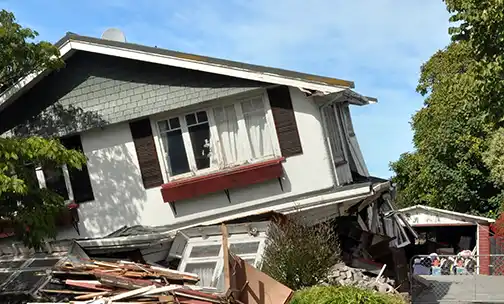
Buying a home in an earthquake zone can be an exciting prospect. Many lovely locations sit on fault lines, but it also requires careful consideration of the potential risks and costs associated with this type of property. Earthquakes are natural disasters that can cause catastrophic damage to homes and other structures, so it is essential to understand the risks involved before any purchase.
Know the Risks
The first step to follow when purchasing a home in an earthquake zone is understanding the risks. Earthquakes can cause damage to homes, ranging from minor cracks to complete structural collapse. The land within earthquake zones can also shift, causing soil liquefaction, landslides, or sinkholes. It is essential to research the specific earthquake risks in the area where you are considering buying a home and weigh those risks against the benefits.
Living With the Risk
Fault lines, which can run for hundreds of miles, are where tectonic plates shift and are the likely sites of future earthquakes. While the chance of an earthquake is small, choosing to live on or near a fault line may exceed your risk tolerance. Homes on a fxaultline bear the most impact if earthquakes occur; therefore, homes on a faultline are at higher risk than those outside the zone.
According to FEMA, many homes are at risk. The top three earthquake-prone states, California, Washington, and Missouri are unprepared. California experiences 90% of the country’s earthquakes but only 10% of the residents have earthquake insurance. Washington is second but only 11.3% of residents have insurance, and Missouri’s Madrid area has declined to 11.4% of owners having insurance mainly due to premiums rising; in 2000, 60% of Madrid’s owners had insurance.
Before Buying a Home in an Earthquake Zone
When buying a home in a state with a high frequency of earthquakes (CA, WA, MO, HI, AK) you will want to plan ahead, deciding where you are comfortable living. You can look at the USGS fault line maps to help with this decision.
Check Building Codes and Regulations
To ensure that homes can withstand seismic activity, faultline zones’ building codes and regulations are often more stringent than in other areas. Before any home purchase, checking that the property meets these requirements is crucial. This check can involve researching building codes and regulations or hiring a structural engineer to inspect the property and provide a report on its structural integrity. This is especially important if the home is a few years old and may have been through a few earthquakes already. Earthquake damage may not be apparent to the untrained eye but may have severe damage.
Some sellers will allow an inspection before an offer is made, and some will not. Your insurance or real estate agent can recommend an inspector that has an earthquake resistance specialty.
Earthquake Resistant Features
It is important that structures have the latest earthquake-resistant technology to mitigate risks. These can include cross-bracing, special diaphragms, shear walls, moment-resisting frames, trusses, and lightweight roofing. If you are unknowledgeable of such features, a professional can be hired to check for them.
I Want the Home, What’s Next?
Before you purchase, determine the recommended accommodations to enhance a home’s earthquake resistance and price them during the escrow period. If you have had the inspection already, you could negotiate for the seller to complete the repairs, or if you could not have an inspection already, you could make an offer contingent on the inspection results. If the inspector finds any issues, you can renegotiate or back out of the sale.
Check Insurance Requirements
Homeowners insurance is essential in case of damage from earthquakes or other natural disasters. However, standard homeowners insurance policies in some earthquake zones do not include earthquake coverage. It is crucial to check insurance requirements in the area where you are buying a home, and to factor in the cost of earthquake insurance if necessary.
What insurance will I need?
If you are borrowing to purchase a home, your lender will require you to, at minimum, have homeowners insurance for the purchase. In higher-risk areas, additional coverage, if not required, is highly recommended.
Homeowners Insurance
This insurance typically covers your home’s structure, your belongings, and living expenses if you are unable to live in your home. Homeowners insurance also covers damage from fire, but does not generally cover earthquakes or floods; those perils require extra insurance.
| Peril- an event or circumstance that results in property damage. |
Earthquake Insurance
Earthquake insurance supplements homeowners insurance and covers earthquake-caused damage for pure loss.
| Pure loss- a value of items lost will be assessed and reimbured. Different claims will have different pure loss values. |
Parametric Insurance
This is a new way of insuring, where policyholders are insured against specific events using parameters applied to all insured to determine the cost of damage. Payments for this insurance are triggered if the agreed parameters of the contract are met. For example, an earthquake meets or exceeds a defined shake intensity that a third party verifies.
Understand Maintenance Needs
Maintenance is essential for any home, but it is crucial for homes in earthquake zones. Regular maintenance can help ensure that your home remains structurally sound and can withstand seismic activity. Before buying a home in an earthquake zone, it is essential to understand the specific maintenance needs of the property and to factor these costs into your budget. Unless already retrofitted, the older the home, the looser the codes were when built, and the more likely that an earthquake could cause a loss.
Consider Retrofitting
Retrofitting is the process of modifying a home’s structure, making it more resistant to earthquake damage. Retrofitting can involve installing reinforcements such as cross braces or shear walls, which can help a home withstand seismic activity.
The Price of Retrofitting
Making a building earthquake-proof can be a substantial investment. There are several structural additions that can help a home endure the shaking of a massive earthquake. Older homes will benefit most from earthquake upgrades and retrofits. You should know the price of these upgrades from your escrow period and, if not completed before the purchase, which will benefit the most for their costs.
Reselling a Faultline Property
As you learned from the buying process, it can be tricky to sell a property on a faultline. Similar to when powerlines are close to a home, a faultline can negatively impact your home’s value. Expect to demand a lower price if you are in a faultline zone, and you may need to get protective upgrades that are not necessary outside the faultline zone to complete a sale.
Summary and Final Thoughts
Buying a home in an earthquake zone requires careful consideration of the potential risks and costs associated with this type of property. Understanding the specific earthquake risks in the area, checking building codes and regulations, considering retrofitting, checking insurance requirements, and understanding maintenance needs can help you make an informed decision and protect your home and family during an earthquake. By doing your due diligence, making informed decisions, and having sufficient insurance to protect from the worst, you can enjoy your home in an earthquake zone with confidence and peace of mind.
SIMILAR ARTICLES
 How to Prepare Your Family and Your Home for Natural Disasters | PenFed Credit Union
Get guidance on emergency professionals' recommendations for preparing your family and home for natural disasters.
 Items that are (Probably) not Covered by Your Homeowner's Insurance Policy | PenFed Credit Union
Curious about you homeowner's insurance limitations? Here are some items that are probably not covered under your policy.
 Tips for Finding Excellent Contractors, Electricians, and Plumbers | PenFed Credit Union
Not sure how to decide who to hire for your home renovation, electrical work or plumbing? Here are some tips to help you make a more informed decision.
 Mortgages 101: What First-Time Homebuyers Need to Know | PenFed Credit Union
Overview of mortgage terminology that first-time homebuyers will come across when buying their first home. It's important to understand the terminology used so buyers can better understand their mortgage.
Home Buying Steps
Mortgage Products
Disclosures
*Conventional Loans
Except for holidays, rates are updated Monday through Friday at 10:15am EST. The advertised rates and points are subject to change. The information provided is based on 1.125 discount point, which equals 1.125 percent of the loan amount, and assumes the purpose of the loan is to purchase a property with a 30-year, conforming, fixed-rate loan. Loan amount of $400,000; loan-to-value ratio of 75%; credit score of 760; and DTI of 18% or less. The property is an existing single-family home and will be used as a primary residence. The advertised rates are based on certain assumptions and loan scenarios, and the rate you may receive will depend on your individual circumstances, including your credit history, loan amount, down payment, and our internal credit criteria. Other rates, points, and terms may be available. All loans are subject to credit and property approval.
Rates quoted require a loan origination fee of 1%; not to exceed $1,995. Speak to a PenFed Mortgage Loan Officer for additional details.
**FHA Loans
Except for holidays, rates are updated Monday through Friday at 10:15am EST. The advertised rates and points are subject to change. The information provided is based on 1.375 discount point, which equals 1.375 percent of the loan amount, and assumes the purpose of the loan is to purchase a property with a 30-year, conforming, fixed-rate loan. Loan amount of $400,000; loan-to-value ratio of 96.5%; credit score of 760; and DTI of 18% or less. The property is an existing single-family home and will be used as a primary residence. The advertised rates are based on certain assumptions and loan scenarios, and the rate you may receive will depend on your individual circumstances, including your credit history, loan amount, down payment, and our internal credit criteria. Other rates, points, and terms may be available. All loans are subject to credit and property approval.
Rates quoted require a loan origination fee of 1%; not to exceed $1,995. Speak to a PenFed Mortgage Loan Officer for additional details.
***VA Loans
Except for holidays, rates are updated Monday through Friday at 10:15am EST. The advertised rates and points are subject to change. The information provided is based on 1.0 discount point, which equals 1.0 percent of the loan amount, and assumes the purpose of the loan is to purchase a property with a 30-year, conforming, fixed-rate loan. Loan amount of $450,000; loan-to-value ratio of 95%; credit score of 760; and DTI of 18% or less. The property is an existing single-family home and will be used as a primary residence. The advertised rates are based on certain assumptions and loan scenarios, and the rate you may receive will depend on your individual circumstances, including your credit history, loan amount, down payment, and our internal credit criteria. Other rates, points, and terms may be available. All loans are subject to credit and property approval.
Rates quoted require a loan origination fee of $995.
****Jumbo Loans
Except for holidays, rates are updated Monday through Friday at 10:15am EST. The advertised rates and points are subject to change. The information provided is based on 1.0 discount point, which equals 1.0 percent of the loan amount, and assumes the purpose of the loan is to purchase a property with a 30-year, non-conforming, fixed-rate loan. Loan amount of $1,009,000; loan-to-value ratio of 70%; credit score of 760; and DTI of 18% or less. The property is an existing single-family home and will be used as a primary residence. The advertised rates are based on certain assumptions and loan scenarios, and the rate you may receive will depend on your individual circumstances, including your credit history, loan amount, down payment, and our internal credit criteria. Other rates, points, and terms may be available. All loans are subject to credit and property approval.
Rates quoted require a loan origination fee of 1%; not to exceed $1,995. Speak to a PenFed Mortgage Loan Officer for additional details.





Routing #256078446
©2026 Pentagon Federal Credit Union